Introduction
In industries where water or solvents must be removed from a solution, Multiple Effect Evaporators (MEE) have become the preferred choice for efficient and cost-effective evaporation. By using steam energy in multiple stages, these systems significantly reduce energy consumption while maximizing output.
From wastewater treatment to concentration of industrial liquids, MEE systems are a vital component in sectors such as food processing, chemicals, textiles, and pharmaceuticals. This guide covers everything you need to know about MEEs — including their working principle, benefits, applications, and maintenance.
What is a Multiple Effect Evaporator?
A Multiple Effect Evaporator is an industrial evaporation system that removes water or other solvents by boiling, using a series of evaporator vessels called “effects.” Steam is introduced in the first vessel to heat the liquid, and the vapor generated is used as the heating source for the next stage. This cascading process repeats across multiple effects, making the system highly energy-efficient
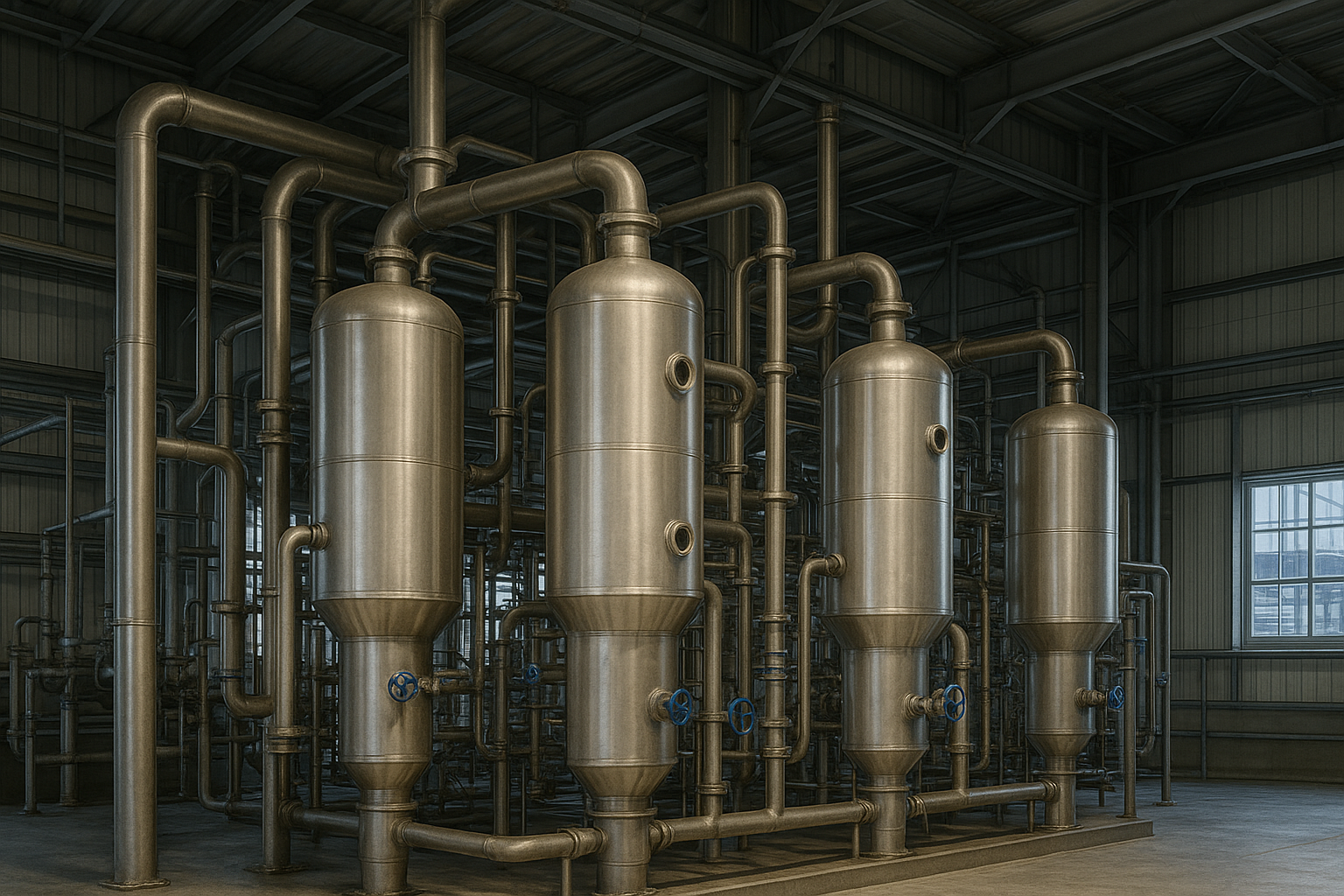
How Does a Multiple Effect Evaporator Work?
The MEE process relies on thermal energy recycling:
1. First Effect
Live steam heats the feed liquid, causing part of it to evaporate.
2. Second Effect
Vapor from the first effect serves as the heating medium, using lower pressure and temperature.
3. Subsequent Effects
Each stage repeats the process, using vapor from the previous effect.
4. Condensation
The final vapor is condensed, often using cooling water, and may be reused.
Conclusion
Multiple Effect Evaporators (MEE) are a proven, energy-efficient solution for industrial evaporation. By reusing heat energy in successive stages, MEEs significantly reduce operational costs while delivering high performance in diverse applications — from wastewater concentration to food processing.
With growing emphasis on sustainable manufacturing and zero liquid discharge, MEEs are set to remain a cornerstone of modern industrial water and solvent management. Choosing the right design, maintaining it properly, and integrating energy-saving practices can further enhance its efficiency and lifespan.